
Are Telehandlers Required to Have NDT Inspections in Alberta?
Understanding What Alberta OHS Actually Requires
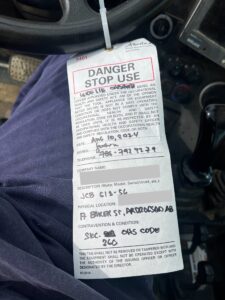
Telehandlers are a unique category of equipment because the Alberta OHS Code does not specifically reference them anywhere. This often leads to confusion about inspection and NDT requirements. However, OHS officers still have several sections of the legislation they can rely on, and we recently saw this in action when a client’s JCB 512 telehandler was shut down. Below is a clear breakdown of what the Code requires, what it implies, and where NDT fits into the picture.
1. General Employer Responsibilities (The Catch-All Clause)
Under Section 2 of the OHS Act, employers must ensure equipment is maintained in a safe operating condition. OHS officers frequently rely on this section when they see any equipment being used in an unsafe manner. If a component is suspected to be damaged or unsafe, the employer is expected to follow the manufacturer’s recommended inspections, which may include NDT on structural parts.
2. The One Section That Does Apply to Telehandlers: Part 19 – Powered Mobile Equipment
Even though telehandlers are not named directly, OHS officers will use this portion of the Code:
“Inspection and maintenance
260(1) An employer must ensure that powered mobile equipment is inspected by a competent worker for defects and conditions that are hazardous or may create a hazard.
260(2) An inspection under subsection (1) must be made in accordance with the manufacturer’s specifications.”
This is what was used in the recent shutdown case.
In our client’s situation, the telehandler was reportedly missing both:
a daily inspection log, and
an operator’s manual.
While I’ve never seen a telehandler shut down for this before, it appears the OHS officer was targeting the lack of documentation — not structural integrity. Without logs or manuals, the employer cannot prove that competent inspections are being performed per the manufacturer’s requirements.
3. CSA Standard B335 — Not Required in Alberta, but Very Useful
CSA B335 is the national standard for forklifts. While most provinces reference it, Alberta does not. Therefore, it is not mandatory.
However, it provides clear guidance on fork inspection:
“8.4.2 Inspection
Fork inspection shall be carried out carefully, by trained personnel… to detect any damage, failure, deformation, etc.”
The standard continues by recommending:
annual fork inspections,
visual checks for cracks, and
NDT if damage is suspected.
Although optional in Alberta, following CSA B335 is considered best practice, especially for clients working on large construction sites.
4. Construction Site Requirements (Industry Practice)
Many major construction sites and general contractors require:
annual telehandler inspections, and
an engineer’s certification
before the equipment is allowed onto their site.
This is a site policy, not an OHS requirement — but it is something owners should be aware of.
Conclusion
While Alberta OHS does not explicitly mandate NDT inspections for telehandlers, employers are still responsible for ensuring equipment is safe. The most important things to stay compliant are:
-Maintain proper paperwork
- Daily inspection logs
- Operator’s manuals
- Documented manufacturer-required maintenance
-Follow best practices
We recommend adopting CSA B335’s approach to fork inspection: have trained personnel perform annual inspections, and bring in an NDT company if cracks or damage are suspected.
-Be prepared for construction site policies
Annual inspections with engineering signoff are commonly required. If you would like help with annual inspections, NDT on your forks, or ensuring your paperwork meets OHS expectations, feel free to reach out, we’d be happy to support you.